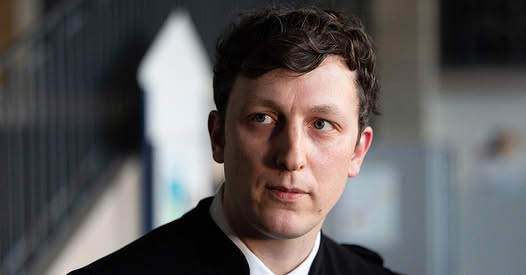
The French legal community was left in shock by the death of Maxime Tessier, a young criminal defense lawyer who died in July 2025 shortly after completing one of the country’s most closely watched criminal trials.
Tessier was 33 years old, according to a death notice and reporting from Le Monde, although several contemporaneous French legal reports described him as 34.
The Rennes prosecutor said an investigation into his death had been opened and that the circumstances were considered consistent with suicide at the time.
His death came only weeks after the conclusion of the trial of former surgeon Joël Le Scouarnec, whom Tessier had defended alongside fellow lawyer Thibaut Kurzawa.
What Happened to Maxime Tessier?
Tessier died during the night of July 8–9, 2025.
According to the Rennes prosecutor, investigators opened an inquiry into the circumstances of his death. Prosecutors said that, based on the information then available, the evidence pointed toward suicide.
Tessier was reportedly found alive and transported to hospital, where he subsequently died.
Authorities did not initially disclose detailed circumstances surrounding his death.
A Lawyer at the Center of a Major French Trial
Maxime Tessier had become widely known within the French legal community through his work on the Le Scouarnec case.
Beginning in 2022, he worked with Thibaut Kurzawa in defending the former surgeon, whose trial concerned sexual offenses committed against hundreds of victims.
The proceedings lasted three months and concluded in May 2025 with Le Scouarnec receiving a 20-year prison sentence.
Tessier’s role as defense counsel placed him at the center of a trial involving extremely serious allegations and testimony from numerous victims.
Remembered for His Professionalism and Humanity
Following Tessier’s death, fellow lawyers described him as talented, thoughtful, respectful and deeply committed to his profession.
His associate, Catherine Glon, remembered him as a lawyer with a very high conception of justice who placed demanding expectations on himself.
Other members of the Rennes legal community described his death as a devastating loss for the profession.
Several lawyers who encountered Tessier during the Le Scouarnec proceedings also spoke about his respectful treatment of victims despite representing the defendant.
Career in Criminal Law
Tessier specialized in criminal law and practiced with the Rennes-based firm Avocats Liberté.
He became an associate of Catherine Glon, a former president of the Rennes Bar, and developed a reputation in criminal defense.
Legal publications also identified him as an instructor in criminal law and criminal procedure at universities in Rennes and at the École des Avocats du Grand Ouest.
He was involved with professional organizations including the Association des Avocats Pénalistes and the Association Française de Droit Pénal.
The Le Scouarnec Trial
Tessier and Kurzawa represented Le Scouarnec during a trial that attracted national attention in France.
Le Scouarnec was convicted in May 2025 and sentenced to 20 years in prison after being found guilty of rape and sexual assault involving 299 victims.
Many of the victims had been children at the time of the offenses.
Tessier’s defense work involved representing his client while maintaining a respectful relationship with the victims and other participants in the proceedings.
Following Tessier’s death, several people connected to the trial publicly expressed their shock and paid tribute to his conduct as a lawyer.
Family and Personal Life
Tessier was described in contemporary reports as being in a relationship and the father of two young children.
His sudden death left behind his children, partner, family, friends and professional colleagues.
Further private details about his family have not been widely made public.
His relatives have been allowed privacy as they grieve his death.
Questions Surrounding His Death
The circumstances surrounding Tessier’s death generated discussion within the legal community, particularly because of the extremely demanding nature of the trial he had recently completed.
Some lawyers and commentators raised concerns about the psychological burden that particularly traumatic criminal cases can place on legal professionals.
However, no definitive explanation for Tessier’s death has been publicly established.
The Rennes prosecutor’s statement that the evidence pointed toward suicide described the investigative position at the time; it should not be expanded into an unsupported claim about Tessier’s personal motivations.
Maxime Tessier Death Details
| Detail | Information |
|---|---|
| Full name | Maxime Tessier |
| Profession | Criminal defense lawyer |
| Age | 33 according to death notice; some reports said 34 |
| Date of death | July 9, 2025 |
| Location | France |
| Legal practice | Avocats Liberté, Rennes |
| Specialization | Criminal law |
| Notable case | Joël Le Scouarnec trial |
| Co-counsel | Thibaut Kurzawa |
| Reported cause | Suicide, according to the prosecutor’s preliminary assessment |
| Investigation | Opened into circumstances of death |
| Partner | Reported |
| Children | Two young children |
| Professional roles | Lawyer and legal educator |
| Professional associations | Association des Avocats Pénalistes and Association Française de Droit Pénal |
A Sudden Loss for the French Legal Community
Maxime Tessier’s death came at a particularly significant point in his young legal career.
He had established himself as a criminal defense specialist, worked on a nationally significant trial and earned the respect of colleagues who described him as intelligent, careful and humane.
His death was mourned not only by fellow members of the Rennes Bar but also by people involved in the Le Scouarnec proceedings.
For those who knew Tessier personally, his death represented the loss of a young lawyer, colleague, partner and father whose professional career was still developing.
Disclaimer
This article is based on publicly available information concerning Maxime Tessier’s death in July 2025. Authorities opened an investigation into the circumstances of his death, and the Rennes prosecutor said the available evidence pointed toward suicide. Details about a person’s private motivations should not be inferred without direct evidence. Family and memorial information should be confirmed through authorized representatives.